MIDI Utilities
Last check of all links: 2018-07-11
Welcome to my knowledge base!
I crawled the web and especially public software repositories like SourceForge or GitHub for free software to set up a robust MIDI environment on a PC running Windows 7. My goal was to find a series of small and simple music production tools so I don't have to buy and use all-too-common swiss-army-knife-like monster software behemoths like Ableton Live, Cubase, GarageBand, Logic Pro, REAPER etc. for creating music.
It turned out that the functionality of those Digital Audio
Workstations can in large part be replaced with what I found. Feel free
to check it out!
Eibelstadt, July 2018
Stefan Hetzel
Setting up a MIDI system
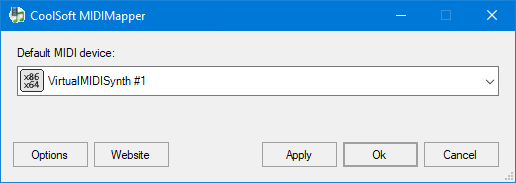
CoolSoft MIDI Mapper
... by, Claudio Nicora (free software for Windows, in
active development, tested under Windows 11 Home), solves a major problem when working with MIDI under MS Windows:
Since Vista, there's no more interface for choosing which MIDI device
will be used by default. So, the notorious "Microsoft GS Wavetable
Synth" will haunt all your MIDI apps, e.g. the Windows Media Player. By
installing this utility you will be able to determine a default MIDI
device for your workstation via the Control Panel.
loopMIDI
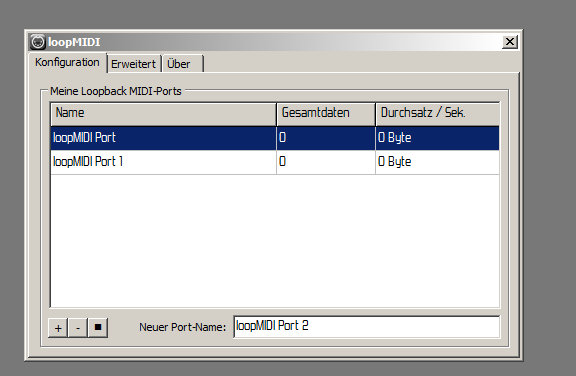
... by Tobias Erichsen (free software for Windows, in active development, tested under Windows 11 Home) is a "virtual loopback cable" that is indispensible if you want to exchange data between several independent MIDI apps running simultaneously on your machine.
Red Dot Forever
... by Matthijs Hollemans aka mahlzeit (free software for Windows, no longer in active development, tested under Windows 7 Home Premium Service Pack 1) is a Standard MIDI File recorder. It is a classical one-purpose-utility with all the advantages of this kind of thingie: It's robust, simple, well-arranged, small & unobtrusive. And Matthijs gets a bonus point for the software's name.

VMPK
... by Pedro Lopez-Cabanillas (free software for Windows, in active development, tested under Windows 7 Home Premium Service Pack 1) displays a very big and highly customizable MIDI piano display on your desktop.
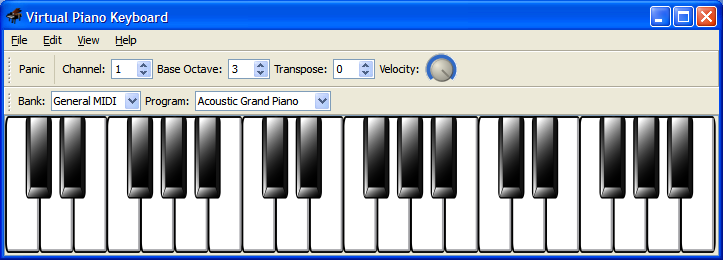
Here is a customized view of VMPK on top of Windows Media Player rendering a Standard MIDI File, with Putzlowitsch's MIDI Mapper and loopMIDI working in background. The two buttons below middle C are displaying the current status of the keyboard's sostenuto (left) and sustain pedal (right):

Midi Database
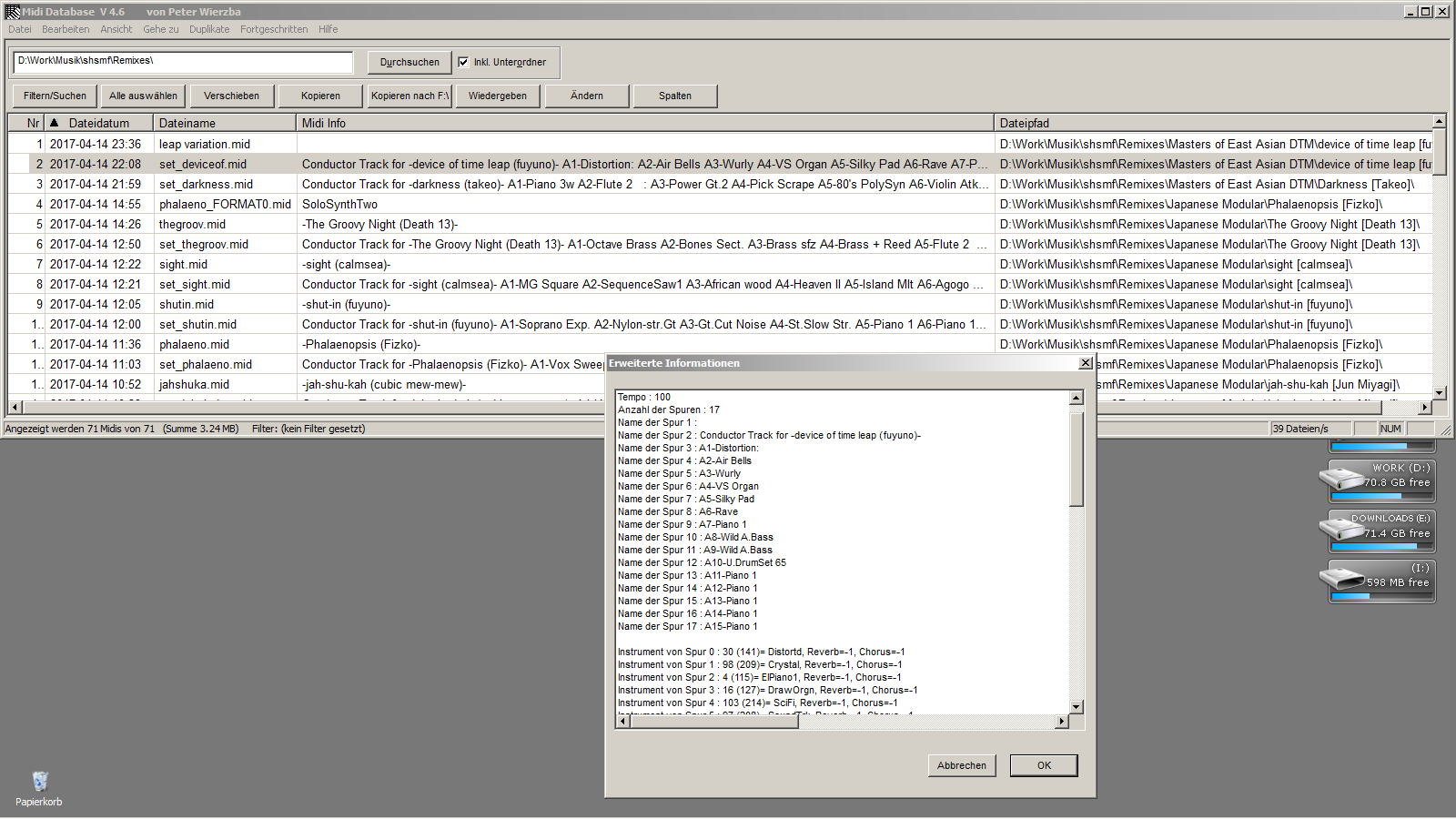
... by Peter Wierzba (free software for Windows, tested under Windows 7 Home Premium Service Pack 1) is the best way to catalogue the collection of Standard MIDI Files on your hard disks. It's reliable and quite self-explanatory.
Editing a Standard MIDI File
MidiEditor
... by Markus Schwenk (free software for Windows, in active development, tested under Windows 7 Home Premium Service Pack 1) is the software of choice when it comes to editing single-track Standard MIDI Files.

Sekaiju
... by kuzu (free software for Windows, in active development, tested under Windows 11 Home) is good for editing multi-track Standard MIDI Files.

MIDIPLEX
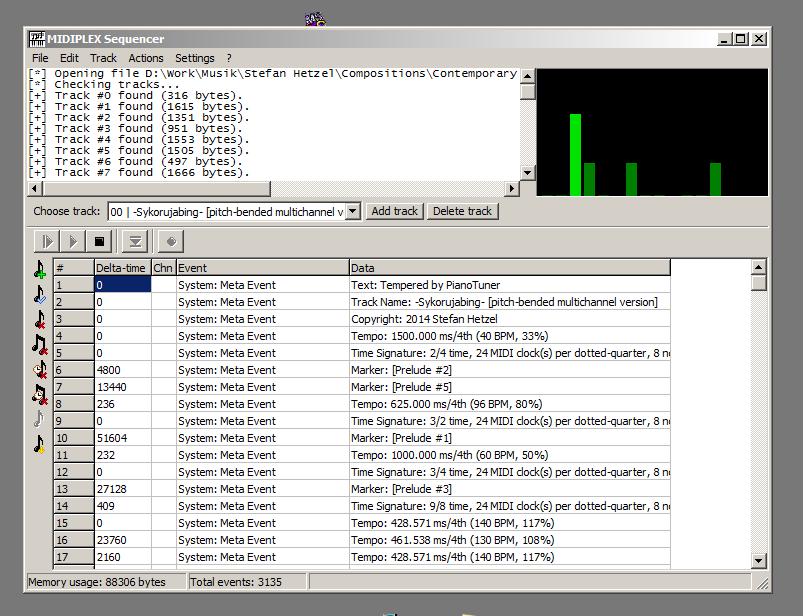
... by Stas'M (free software for Windows, in active development, tested under Windows 11 Home) works fine if you have to edit some Meta Events in a Standard MIDI File's header or insert some Control Change messages. You also can change a Standard MIDI File's type.
Playing a Standard MIDI File
Desktop MIDI
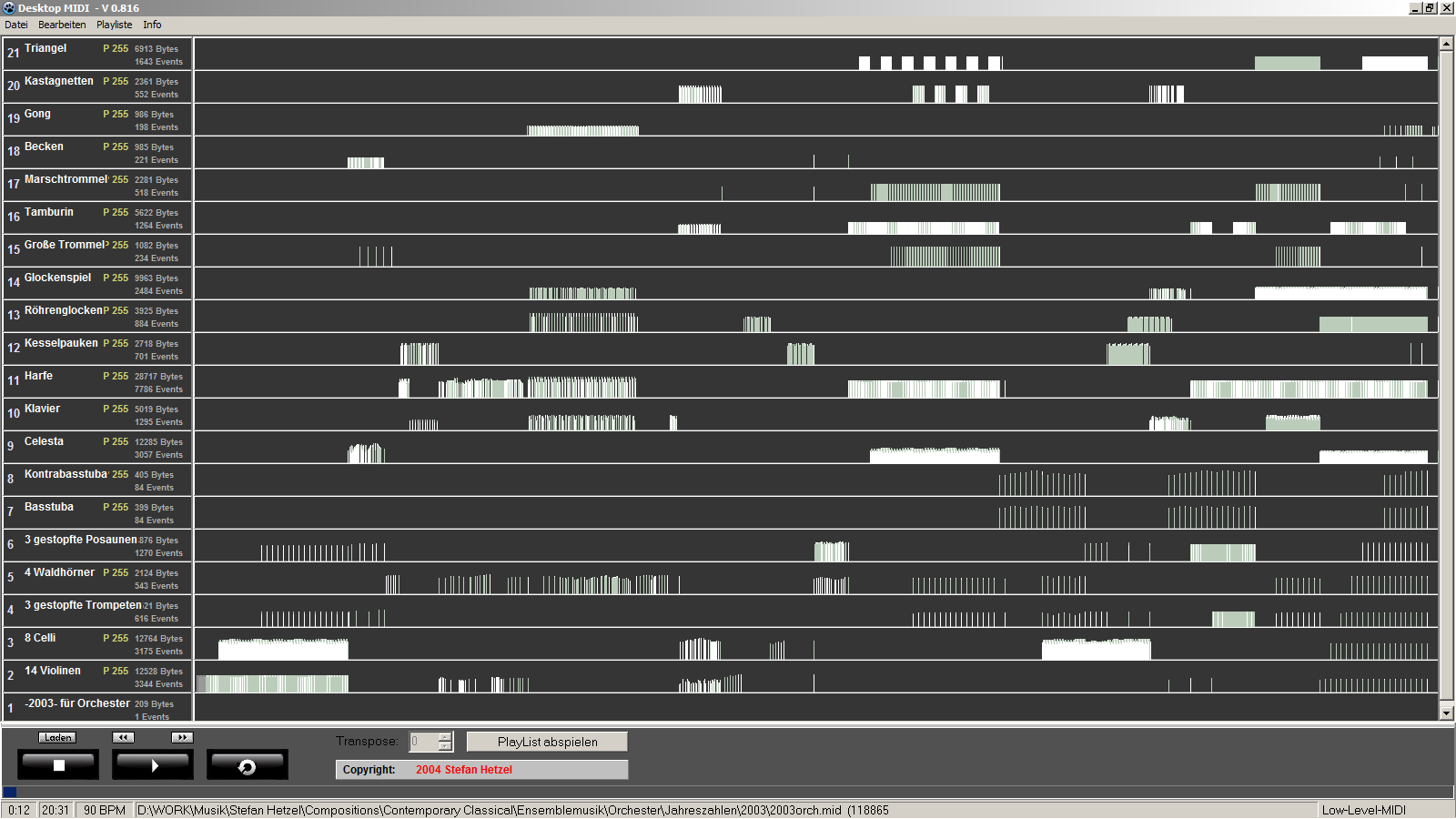
.. by Peter Schneider aka BreakOutBox (free software for Windows, no longer in active development, tested under Windows 7 Home Premium Service Pack 1) is, believe it or not, my favourite Standard MIDI File player. It is incredibly old, but still unrivaled because of its impeccable timing. I also like its visualization concept.
Tom's MIDI Player
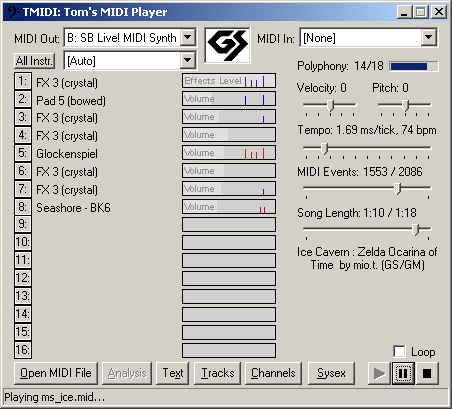
... by Tom Grandgent (free software for Windows, tested under Windows 7 Home Premium Service Pack 1) is perfect for testing Standard MIDI Files, especially microtonal ones tempered with PianoTuner. The timing is very good, but (on my machine) not impeccable. For impeccable timing, use Desktop MIDI.
Rendering a Standard MIDI File to audio
sforzando
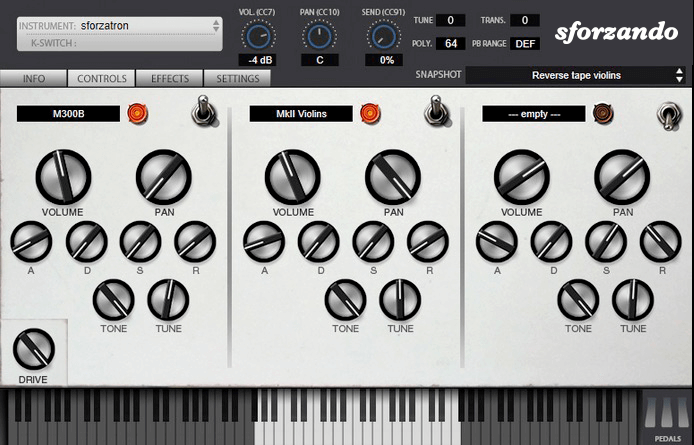
... by Plogue (free software for Windows, in active development,
tested under Windows 11 Home) is unbeatable for
offline-rendering your mono-timbral Standard MIDI File to audio using
soundfonts in the sfz or the older sf2
format. Sforzando handles Scala's
scl-files neatly, so you are able to generate microtonal
music.
Freepiano
... by Li Jia (free software for Windows, in active development,
tested under Windows 7 Home Premium Service Pack 1) is good when your
samples are in Native Instrument's proprietary nki format.
Only Kontakt Player kann render this format.

To get this done, do the following:
- After you've downloaded and installed Freepiano, download and install the VSTi version of the free Kontakt Player.
- Place
Kontakt 5.dllin a folder that Freepiano can access. - In Freepiano, choose Kontakt Player as an "instrument" for Freepiano. Now, Freepiano works as a VST host for Kontakt Player.
- Switch to Kontakt Player and load your chosen
nkifile. - Switch back to Freepiano and load your Standard MIDI File.
- Go to File / Export / Audio
(WAV)... and your Standard MIDI File will be rendered offline (=
in non-realtime mode) to a WAVE audiofile.
- Caveat: As the free version of Kontakt Player shuts down after rendering 15 minutes of audio (even when rendering offline!), you might have to split up longer Standard MIDI Files.